
Automatic LED strip lights get sold on a single number: energy savings. Occupancy sensing cuts consumption 30-45% in intermittently used spaces. Daylight harvesting adds another 20-30% near windows. Stack them and the marketing maths looks unbeatable.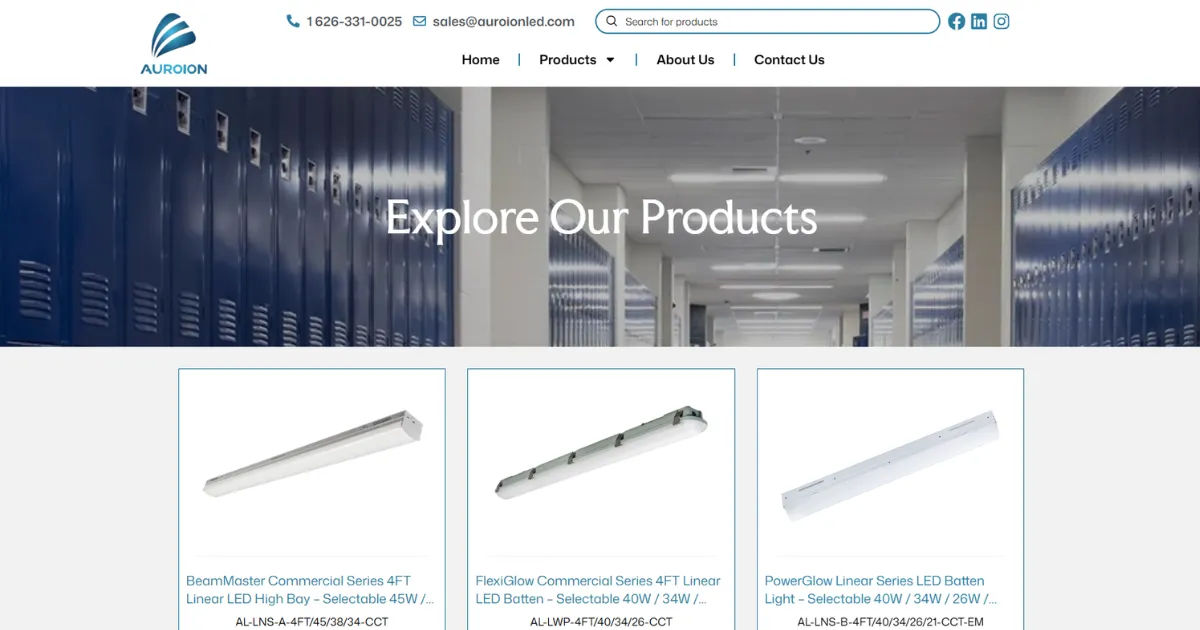
The maths is fine. What the brochure leaves out is that badly configured controls generate more facility complaints than almost any other lighting decision, and a system people fight with gets overridden, taped over, or ripped out. Getting automatic LED strip lighting right is 30% product selection and 70% commissioning.
Where Automation Actually Pays
The savings depend entirely on how often the space is empty. Run through your building honestly:
Strong candidates. Restrooms, storage rooms, stairwells, corridors, conference rooms, break rooms, back-of-house aisles, parking garages during off-peak hours. These spaces sit unoccupied 50-80% of the time and nobody notices a control system that works.
Marginal candidates. Open-plan offices with fixed 9-to-5 occupancy. The lights are on anyway. Daylight harvesting near a window wall still helps, but occupancy sensing adds little.
Poor candidates. Production floors running continuous shifts, 24-hour operations, security-critical areas. Automation here mostly adds hardware that can fail.
PIR vs Microwave vs Dual Technology
Passive infrared sensors detect body heat moving across zones. They are cheap, reliable and need line of sight. They also miss someone sitting still at a desk, which is the single most common source of “the lights keep turning off on me.”
Microwave sensors detect motion through partitions and around corners, so they suit corridors, stairwells and racked warehouse aisles where sightlines are broken. They can also detect movement in the corridor outside, which is how you end up with a storeroom that lights up every time someone walks past.
Dual-technology sensors need both signals to trigger and only one to hold. They cost more and solve most of the complaints. On any space where people sit still — offices, meeting rooms, libraries — I’d spend the extra.
The Settings That Cause the Complaints
Three parameters matter, and installers routinely leave all three on factory defaults:
Time delay. Factory default is often 5 minutes. That’s too short for offices and meeting rooms — set 15-20 minutes. It’s too long for storage rooms, where 5 is fine.
Sensitivity. Turn it up in spaces where people work at a desk. Turn it down in corridors where a passing forklift shouldn’t trigger the whole aisle.
High-end and low-end trim. With daylight harvesting, set the low end to 10-20% rather than full off. People notice a room going dark far more than a room dimming, and holding a low output keeps the space feeling active.
Step Dimming vs Continuous Dimming
Step dimming drops output to a fixed level — usually 30% or 50% — when a space empties, then jumps back to full on detection. It is cheaper, simpler, and the transition is visible.
Continuous 0-10V dimming ramps smoothly over 2-5 seconds. It costs more per fixture and is worth it in any space where occupants are present enough to notice. In a stairwell nobody cares. In an office, the step-dim jump is the thing people write tickets about.
Commissioning Is Not Optional
Budget half a day per floor to walk the space with the sensors live, sit still at desks, close doors, and adjust. A system that is installed but never tuned will underperform its energy model and outperform every other system in complaint volume.
Auroion LED supplies automatic LED strip lights with occupancy sensing and dimming built for commercial installations, with 0-10V driver options that integrate with standard building control systems rather than proprietary hardware you’ll struggle to source later.
Frequently Asked Questions
Do automatic LED strip lights actually save enough to justify the cost?
In intermittently occupied spaces, yes. Restrooms, storage rooms and corridors typically see 40-60% consumption reductions, which pays back the sensor premium in 18-30 months at commercial electricity rates. In continuously occupied spaces the case is much weaker.
Does frequent switching shorten LED lifespan?
Not meaningfully for the diodes, unlike fluorescent. The driver is the component to check — confirm it’s rated for high switching cycles if it’s going into a busy corridor or restroom where it may cycle 40 or more times a day.
Can I add sensors to existing LED strip fixtures?
Often yes, using a wall-mounted or ceiling-mounted sensor wired ahead of the fixtures on the circuit. Integrated sensors give finer zone control, but a retrofit sensor controlling a whole circuit captures most of the savings at lower cost.
What’s the right time delay setting for automatic LED strip lighting?
Use 15-20 minutes for offices and meeting rooms where people sit still, and 5-10 minutes for storage rooms, restrooms and corridors. Anything under 5 minutes in an occupied workspace guarantees complaints and usually ends with the sensor being disabled.