
Choosing the right countertop material is an important decision when remodeling a kitchen or bathroom. Homeowners want a surface that looks beautiful, lasts for many years, and handles everyday activities without requiring constant repairs. Granite is one of the most popular natural stone options because of its durability, attractive appearance, and ability to complement different interior designs. 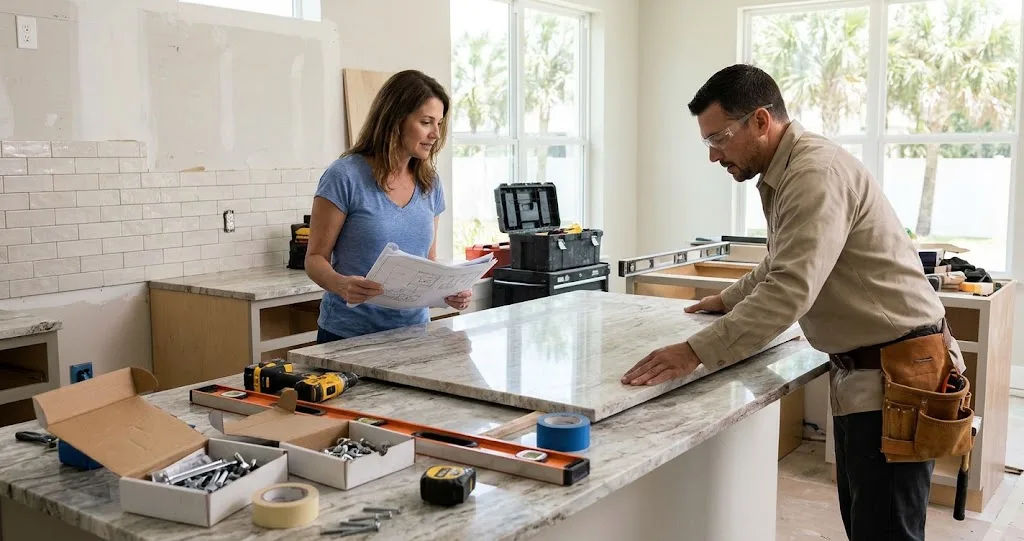 However, is it the right choice for homes in Jacksonville, Florida?
Granite can be an excellent option for countertop installation Jacksonville FL because it offers impressive strength, natural beauty, and resistance to everyday wear. Its unique patterns and wide range of colors make it suitable for traditional, modern, and contemporary kitchens. It can also withstand normal kitchen heat and provide a long-lasting surface when properly maintained.
However, granite has certain disadvantages that homeowners should understand before making a purchase. Its weight, maintenance requirements, installation costs, and need for periodic sealing are important considerations. Jacksonville's warm, humid climate also makes proper material selection and maintenance essential.
This comprehensive guide explains the benefits and disadvantages of granite, how it performs in Florida homes, what installation involves, and how to determine whether it is the right investment for your property.
Granite Countertops
Granite is a natural stone formed when molten rock cools slowly beneath the Earth's surface. This process creates a dense material containing minerals such as quartz, feldspar, and mica.
These minerals contribute to granite's strength, appearance, and natural color variations. Every granite slab has a slightly different pattern, making each countertop unique.
Unlike manufactured surfaces, granite does not have a completely uniform appearance. Some slabs feature small, consistent patterns, while others contain dramatic veins, speckles, and contrasting mineral formations.
Granite is commonly used in kitchens, bathrooms, laundry rooms, and outdoor cooking areas. Its combination of appearance and durability makes it a popular choice for residential remodeling projects.
Why Homeowners Choose Granite
Many homeowners prefer granite because it combines practical performance with natural beauty.
It can complement several cabinet colors, flooring materials, backsplashes, and kitchen layouts. Whether someone prefers a bright white kitchen or a darker, traditional design, there is usually a granite option that fits the overall appearance.
Granite also offers long-term value. When properly installed and maintained, it can remain attractive and functional for decades.
Benefits of Granite for Countertop Installation Jacksonville FL
Granite offers several advantages that make it suitable for residential kitchens and bathrooms in Jacksonville.
Understanding these benefits can help homeowners decide whether natural stone meets their expectations.
1. Excellent Durability
One of granite's biggest advantages is its durability.
Granite is a hard natural stone that can withstand everyday kitchen activities. It generally resists scratches better than many softer countertop materials.
This makes it useful for busy households where food preparation, cooking, and regular cleaning happen throughout the day.
However, granite is not completely scratch-proof. Using sharp knives directly on the surface can damage the finish or dull the blades.
Homeowners should always use cutting boards to protect their countertops and kitchen equipment.
2. Resistance to Heat
Granite performs well around normal kitchen heat.
Hot cookware placed briefly on a granite surface is less likely to cause damage than it would on certain laminate or manufactured surfaces.
This feature makes granite appealing to homeowners who frequently cook and need a dependable kitchen workspace.
Nevertheless, sudden temperature changes can create thermal stress. Extreme heat may also affect sealants or cause damage under certain conditions.
Using trivets and heat-resistant pads remains a sensible precaution.
3. Unique Natural Appearance
Every granite slab has its own mineral composition and pattern.
This natural variation gives homeowners an opportunity to create a distinctive kitchen design.
Popular granite colors include:
-
White and gray.
-
Black and charcoal.
-
Beige and cream.
-
Brown and gold.
-
Green and blue.
-
Red and multicolored combinations.
Lighter granite can make smaller kitchens feel brighter and more spacious. Darker varieties can create a dramatic appearance and complement white or natural wood cabinets.
Homeowners should inspect the actual slab before purchasing because small samples may not represent the complete pattern.
4. Long-Term Value
Granite can be a worthwhile investment for homeowners who plan to stay in their properties for many years.
Its durability reduces the likelihood of needing frequent countertop replacement.
Additionally, natural stone is often viewed as an attractive feature in residential properties. A well-designed kitchen with quality granite countertops may improve the overall appeal of a home.
However, increased resale value is not guaranteed. The actual benefit depends on neighborhood expectations, property condition, installation quality, and buyer preferences.
5. Suitable for Different Interior Designs
Granite works with many kitchen styles.
For traditional kitchens, homeowners might choose beige or brown granite with detailed patterns.
Modern kitchens often look attractive with black, white, or gray granite paired with simple cabinets.
For farmhouse-inspired spaces, warm granite colors can complement wooden cabinets and natural flooring.
Its design flexibility makes it easier to coordinate countertops with existing kitchen features.
Does Granite Perform Well in Jacksonville's Climate?
Jacksonville experiences warm temperatures, humid conditions, and seasonal storms. These environmental factors make material selection particularly important.
Granite can perform well in this climate, but homeowners should understand how moisture, sunlight, and temperature changes affect natural stone.
Humidity and Moisture Resistance
Granite is relatively dense, but it is not completely waterproof.
Some varieties are more porous than others. Without proper sealing, certain liquids can penetrate the surface and leave stains.
Jacksonville's humidity does not automatically damage granite. However, moisture management is important, particularly around sinks, faucets, and other areas that experience frequent water exposure.
A suitable penetrating sealer can reduce the likelihood of liquid absorption.
Homeowners should also wipe up standing water and spills rather than allowing them to remain on the countertop for extended periods.
Performance During Hot Weather
Granite generally handles normal temperature changes well.
It does not soften or melt under ordinary kitchen conditions. This makes it suitable for homes where cooking activities generate considerable heat.
However, outdoor granite countertops require additional consideration.
Direct sunlight can increase surface temperatures, while outdoor exposure introduces rain, humidity, and changing weather conditions.
For exterior applications, homeowners should choose a suitable granite variety and confirm that the finish and installation materials are appropriate for outdoor use.
Resistance to Everyday Kitchen Conditions
A Jacksonville kitchen may experience spills from coffee, cooking oils, citrus juice, sauces, and cleaning products.
Granite can handle regular use, but acidic liquids may affect certain stone finishes or damage protective sealers.
Cleaning spills promptly helps preserve the surface.
Avoid assuming that every granite variety has identical resistance to moisture and staining. The stone's composition, finish, and sealing condition all matter.
Potential Disadvantages of Granite Countertops
Although granite has several benefits, it is not perfect.
Homeowners should consider its disadvantages before selecting it for their remodeling project.
1. Requires Periodic Sealing
Many granite varieties benefit from periodic sealing.
A penetrating sealer helps reduce liquid absorption and makes everyday cleaning easier.
However, sealing requirements depend on the specific stone. Some granite varieties are naturally less absorbent than others.
There is no universal schedule that applies to every countertop.
Homeowners should follow the recommendations of their stone supplier and test the surface when necessary.
2. Can Be Expensive
Granite pricing varies according to several factors, including:
-
Stone variety.
-
Slab thickness.
-
Color and pattern.
-
Availability.
-
Edge profile.
-
Fabrication requirements.
-
Transportation.
-
Installation complexity.
Rare granite varieties and premium slabs can be significantly more expensive than standard options.
Homeowners should request detailed estimates that include fabrication, cutouts, edge finishing, transportation, and installation.
Comparing complete project estimates provides a more accurate understanding of the investment.
3. Heavy Weight
Granite is a heavy material.
Kitchen cabinets must provide adequate structural support before installation begins.
Older cabinets, damaged cabinet frames, and poorly constructed supports may require repairs or reinforcement.
A professional installer should inspect the cabinetry and verify that it can support the selected slabs.
4. Can Chip or Crack
Granite is strong, but it is not indestructible.
Heavy objects dropped near exposed edges can cause chips. Poor support, incorrect handling, or excessive stress can also contribute to cracking.
Professional fabrication and installation help reduce these risks.
Homeowners should pay particular attention to corners, sink openings, and areas with unsupported overhangs.
How Does Granite Compare With Other Countertop Materials?
Before choosing granite, it is helpful to compare it with other popular materials.
Granite vs. Quartz
Granite is a natural stone, while quartz countertops are engineered using crushed quartz and binding materials.
Granite offers natural patterns and can tolerate normal kitchen heat relatively well.
Quartz provides more consistent colors and patterns. It is generally nonporous and does not require routine sealing.
However, quartz can be sensitive to excessive heat.
The better option depends on whether homeowners prioritize natural appearance, low maintenance, or predictable design.
Granite vs. Marble
Marble is known for its elegant veining and luxurious appearance.
However, it is generally softer and more susceptible to scratching and etching than granite.
Granite is usually a more practical option for busy kitchens where durability is a priority.
Marble may be more appropriate for homeowners who prioritize its distinctive appearance and are comfortable with additional maintenance.
Granite vs. Laminate
Laminate is generally more affordable and lightweight than granite.
It is available in many colors and patterns, including designs that imitate natural stone.
However, laminate does not offer the same natural appearance or resistance to heat and physical damage as granite.
Granite is usually a better long-term option for homeowners seeking a durable natural stone surface.
What Should You Consider Before Installing Granite?
Selecting granite involves more than choosing an attractive color.
Several practical details can influence the project's cost, appearance, and long-term performance.
Evaluate Your Kitchen Layout
Start by measuring the available countertop space.
Consider the location of sinks, cooktops, dishwashers, refrigerators, and other appliances.
Kitchen islands may require larger slabs or special support arrangements.
An accurate layout helps installers determine the material requirements and identify potential fabrication challenges.
Choose the Right Granite Color
Granite colors should complement the rest of the kitchen.
Consider the relationship between countertops, cabinets, flooring, backsplash tiles, and wall colors.
For example, white granite can brighten a kitchen with dark cabinets.
Black granite may create a sophisticated contrast with lighter cabinetry.
Warm beige or brown granite can coordinate with traditional wooden interiors.
Always examine full slabs under appropriate lighting before making a final selection.
Check the Slab Quality
Not all granite slabs have identical quality.
Before purchasing, inspect the material for:
-
Visible cracks.
-
Weak or damaged edges.
-
Unusual surface imperfections.
-
Inconsistent finishing.
-
Unwanted color variations.
-
Previous repairs.
Natural mineral variations are normal. However, structural defects should be evaluated by a qualified stone professional.
Consider the Countertop Thickness
Granite is commonly available in different thicknesses.
Thicker slabs can create a substantial, traditional appearance, while thinner slabs may provide a cleaner, more contemporary look.
The appropriate thickness depends on the design, support structure, and fabrication requirements.
Discuss available options with the installer before ordering the material.
The Granite Installation Process
A successful countertop installation Jacksonville FL project requires accurate measurements, proper fabrication, careful handling, and professional finishing.
Although the exact process varies according to the kitchen layout, most projects follow several important stages.
Step 1: Initial Consultation
The process begins with discussing the homeowner's requirements.
The installer evaluates the kitchen layout, preferred granite colors, budget, and design expectations.
This stage helps determine whether granite is appropriate for the project.
Step 2: Measurements and Templating
Accurate measurements are essential.
Installers create templates that represent the countertop dimensions, including wall angles, cabinet edges, sink openings, and appliance locations.
Precise templating helps ensure that the fabricated pieces fit the available space.
Step 3: Slab Selection and Fabrication
After selecting the granite, the fabrication team cuts it according to the approved measurements.
The team creates openings for sinks, faucets, cooktops, and other fixtures when required.
Edges are shaped and polished to achieve the desired appearance.
Step 4: Cabinet Preparation
Before installation, the cabinets must be checked for stability and proper alignment.
Damaged sections should be repaired.
The installer also verifies that the cabinet structure can support the granite's weight.
Step 5: Transportation and Placement
Granite slabs require careful transportation because improper handling can cause damage.
Installers position the pieces over the prepared cabinets and check their alignment.
Depending on the layout, multiple sections may need to be joined.
Step 6: Seams and Finishing
When a countertop requires multiple slabs, installers create seams between the sections.
The goal is to achieve a strong, neat connection with minimal visual disruption.
The edges, joints, and sink openings are checked before the project is completed.
Step 7: Final Inspection
The final inspection confirms that the countertop is properly positioned and finished.
Installers should check for visible chips, cracks, uneven surfaces, and problems around seams.
Homeowners should also receive instructions about cleaning, sealing, and maintenance.
How Much Does Granite Countertop Installation Cost?
The cost of granite countertops varies depending on the material and complexity of the project.
There is no single price that applies to every Jacksonville home.
Several factors influence the total investment.
Material Selection
Standard granite varieties are often more affordable than rare colors and premium patterns.
Large slabs, unusual colors, and special finishes may increase material costs.
Countertop Size
Larger kitchens require more granite.
Kitchen islands, extended breakfast bars, and additional countertop sections can increase the amount of material needed.
Fabrication and Edge Details
Simple edges are generally less complicated to produce.
Decorative edge profiles, multiple cutouts, and unusual shapes can increase fabrication expenses.
Installation Requirements
Additional work may be necessary when cabinets need reinforcement or existing countertops must be removed.
Plumbing disconnections, appliance adjustments, and disposal fees may also affect the overall project cost.
Homeowners should request itemized estimates and confirm what is included before signing an agreement.
How to Maintain Granite Countertops
Proper maintenance helps granite remain attractive and functional for many years.
Fortunately, routine care is relatively straightforward.
Clean the Surface Regularly
Use a soft microfiber cloth and a cleaner specifically recommended for natural stone.
Warm water and a suitable mild cleaning product are often sufficient for everyday cleaning.
Avoid harsh chemicals that may damage protective treatments or affect the stone's finish.
Clean Spills Immediately
Coffee, wine, cooking oils, fruit juices, and sauces can leave stains if allowed to penetrate porous stone.
Wipe spills promptly using a soft cloth.
Do not allow acidic substances to sit on the surface for extended periods.
Use Cutting Boards
Granite is resistant to everyday scratches, but cutting directly on the surface is not recommended.
Always use a cutting board when preparing food.
This protects both the countertop and kitchen knives.
Avoid Excessive Impact
Do not drop heavy cookware onto countertop edges.
Pay particular attention to corners and areas around sinks because these sections can be more vulnerable to impact damage.
Check the Sealer
Periodically evaluate whether the granite needs resealing.
A common method involves placing a few drops of water on the surface and observing whether the water darkens the stone or absorbs into it.
If absorption occurs relatively quickly, consult the stone supplier about applying an appropriate sealer.
Common Mistakes to Avoid When Choosing Granite
Homeowners can prevent unnecessary expenses and installation problems by avoiding a few common mistakes.
Choosing based only on appearance: A beautiful slab may not meet the maintenance or performance requirements of a busy kitchen.
Ignoring cabinet strength: Granite requires reliable structural support. Installing it over weak cabinets can create serious problems.
Skipping professional measurements: Incorrect measurements can lead to poor fitting, unnecessary seams, and wasted material.
Selecting a slab without inspection: Small samples may not show the full pattern or natural variations of a complete slab.
Ignoring maintenance instructions: Even durable granite requires appropriate cleaning and occasional attention.
Choosing the cheapest estimate: A low price does not always include quality fabrication, proper installation, or adequate project preparation.
Compare workmanship, material quality, warranties, and project details rather than focusing exclusively on price.
Is Granite a Good Investment for Jacksonville Homes?
Granite can be a worthwhile investment for homeowners who want a durable, attractive, and long-lasting countertop.
Its natural appearance gives kitchens a distinctive character, while its strength makes it suitable for everyday household activities.
It is particularly appealing to homeowners who enjoy cooking and want a surface that can handle regular use.
However, the investment makes the most sense when the selected stone matches the home's design, maintenance expectations, and available budget.
Homeowners planning to sell their properties should also consider local buyer preferences and the overall condition of the kitchen.
A well-installed granite countertop can improve a kitchen's appearance, but it should complement the rest of the space rather than become an expensive feature that does not fit the home's overall design.
How to Choose a Reliable Granite Countertop Installer
The quality of installation is just as important as the quality of granite.
Even premium stone can develop problems when measurements, fabrication, or cabinet preparation are handled incorrectly.
When comparing contractors for countertop installation Jacksonville FL, consider the following factors.
Check Experience and Previous Projects
Ask potential installers about their experience with granite countertops.
Request photographs of completed projects that demonstrate their fabrication and finishing quality.
If possible, visit a showroom or inspect previous installations.
Read Customer Reviews
Customer feedback can provide useful information about communication, punctuality, workmanship, and project management.
Look for consistent feedback rather than relying on one positive or negative review.
Request a Detailed Estimate
A professional estimate should explain the material, measurements, fabrication, installation, and additional services.
Ask whether removal of existing countertops, plumbing adjustments, and disposal are included.
Discuss Warranties
Understand what warranties cover and whether they apply to the stone, fabrication, and installation.
Ask how the contractor handles problems involving seams, chips, or installation defects.
Confirm Project Timelines
Discuss the expected schedule before work begins.
Granite installation may involve several stages, including slab selection, templating, fabrication, and placement.
Understanding the timeline helps homeowners prepare their kitchens and arrange any necessary appliance or plumbing services.
Conclusion
Granite is an excellent countertop material for many Jacksonville homeowners because it combines natural beauty, impressive durability, and long-term practicality. Its unique patterns create attractive kitchen designs, while its resistance to everyday scratches and normal kitchen heat makes it suitable for busy households.
The warm and humid conditions in Jacksonville do not automatically make granite unsuitable. However, selecting the right stone, maintaining its protective sealer when necessary, and cleaning spills promptly are important steps toward preserving its appearance.
Before choosing granite, homeowners should carefully evaluate their kitchen layout, cabinet strength, budget, preferred colors, and maintenance expectations. Comparing granite with quartz, marble, and laminate can also help identify the material that best meets their needs.
Professional measurements, accurate fabrication, and proper cabinet preparation are equally important. A beautiful granite slab cannot deliver reliable results if it is poorly supported or incorrectly installed.
When planning countertop installation Jacksonville FL, homeowners should work with experienced professionals who understand natural stone and can explain the complete installation process. They should also request detailed estimates, inspect the selected slab, and clarify warranty coverage before approving the project.
Ultimately, granite is a strong choice for homeowners who appreciate natural materials and want a countertop that can remain attractive for many years. With thoughtful selection, professional installation, and consistent maintenance, granite can become a valuable and practical feature of a Jacksonville kitchen or bathroom.