
When businesses, restaurants, schools, event organizers, and promotional companies order bulk personalized aprons, the material matters almost as much as the design. An apron needs to be comfortable enough for regular use, durable enough to handle repeated washing, and suitable for printing, embroidery, or other forms of personalization.
There is no single fabric used for every apron. Bulk personalized aprons can be made from cotton, polyester, cotton-polyester blends, denim, canvas, twill, or other specialty fabrics. Each material has different strengths, weaknesses, costs, and appearance.
Choosing the right material depends on how the aprons will be used. A restaurant kitchen has different requirements from a cooking school, bakery, salon, craft business, or promotional event. Understanding the common materials can help you order aprons that look professional and perform well.
What Materials Are Commonly Used for Personalized Aprons?
The most common apron materials are cotton, polyester, and blended fabrics. Denim and canvas are also popular when a heavier, more distinctive appearance is needed.
Cotton
Cotton is one of the most familiar materials used for aprons. It is a natural fiber known for its softness, breathability, and comfortable feel.
Cotton aprons are especially useful in environments where people may wear them for several hours. The fabric generally feels less restrictive than some synthetic materials and can be comfortable in warmer conditions.
Another advantage is its natural appearance. Cotton can provide a simple, traditional look that works particularly well for bakeries, cafés, restaurants, cooking classes, and handmade businesses.
However, cotton can absorb moisture and stains. It may also shrink if it is not pre-shrunk or washed according to the manufacturer's instructions.
Polyester
Polyester is a synthetic fiber that is widely used in workwear and promotional apparel. It is valued for its durability, resistance to wrinkles, and ability to maintain its shape.
For bulk personalized aprons, polyester can be practical when the garments need to withstand frequent use. It also tends to dry relatively quickly compared with heavier natural fabrics.
Polyester can work well for colorful designs because certain printing methods bond effectively with synthetic fibers. However, the exact result depends on the type of polyester, printing process, and quality of the apron.
Polyester can also feel warmer than cotton in some situations, so it may not always be the best option for hot kitchen environments.
Cotton-Polyester Blends
A cotton-polyester blend combines characteristics of both fibers. This is why blended fabric is such a common choice for bulk personalized aprons.
Cotton contributes softness and breathability, while polyester contributes durability, shape retention, and resistance to wrinkles. The exact ratio can vary, such as a fabric containing more cotton or more polyester.
Blended aprons can be a good middle ground for organizations that want comfort without giving up too much durability.
They are often suitable for restaurants, hospitality businesses, schools, catering companies, and promotional campaigns where aprons may receive regular use.
Are Bulk Personalized Aprons Made From Denim?
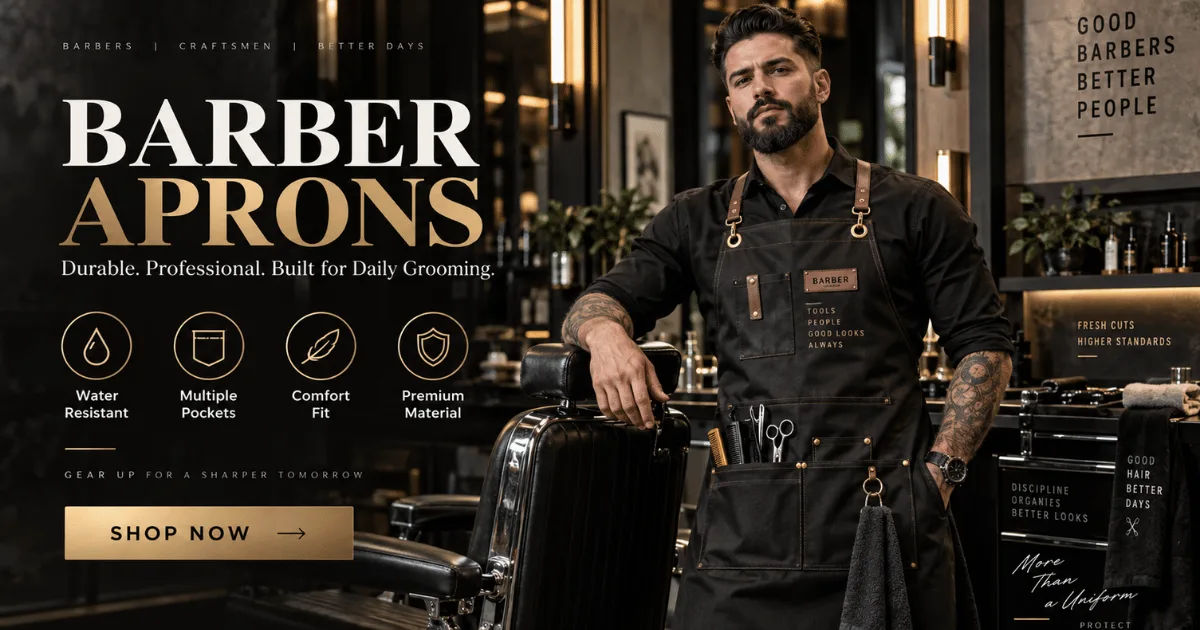
Yes. Denim is another material used for aprons, particularly when a modern, rugged, or premium appearance is desired.Denim is a relatively strong woven cotton fabric. It can provide more structure than lightweight cotton and may create a distinctive appearance for cafés, barbershops, restaurants, workshops, and artisan businesses.
One benefit of denim is its visual character. It can make a branded apron look more substantial and stylish than a basic lightweight apron.
The downside is weight. Heavy denim can feel warmer and less flexible than lighter fabrics. This makes it important to consider the working environment before choosing it for bulk personalized aprons.
What Is Canvas Fabric?
Canvas is another heavy-duty woven material often used for aprons. It is typically thicker and more structured than ordinary lightweight cotton.
Canvas can be a strong option for workers who need additional protection from dust, spills, and everyday wear. It is commonly associated with workshops, crafts, gardening, woodworking, and other hands-on activities.
For bulk personalized aprons, canvas can also create a premium visual impression. Its sturdy texture gives logos and embroidery a bold appearance.
The main consideration is comfort. A heavier fabric can become tiring if worn continuously, especially in warm environments.
What Is Twill?
Twill refers to a type of woven construction rather than one specific fiber. Cotton, polyester, and blended fabrics can all be produced using a twill weave.
The diagonal pattern associated with twill gives the fabric a distinctive appearance and can contribute to durability.
Twill aprons are often used for workwear because they can balance structure and comfort. Depending on the fabric weight and fiber composition, they can be suitable for restaurants, hospitality staff, retail workers, and promotional uniforms.
When comparing bulk personalized aprons, it is useful to ask about both the fiber content and fabric construction. Simply knowing that an apron is "twill" does not tell you exactly what it is made from.
How Does Material Affect Personalization?
The fabric doesn't only affect comfort and durability. It can also influence how a logo, name, slogan, or artwork looks.
Screen Printing
Screen printing is commonly used for larger quantities because it can be efficient when the same design is applied repeatedly.
The fabric, ink, and curing process all affect the final result. Some printing methods are better suited to cotton, while others work particularly well with synthetic fabrics.
If you are ordering bulk personalized aprons, ask the supplier which printing method is recommended for the selected fabric.
Embroidery
Embroidery uses thread rather than ink. It can give an apron a professional and durable appearance.
It works particularly well for company names, logos, and simple designs. However, very detailed artwork may need to be simplified before embroidery.
The weight of the fabric also matters. Heavier materials such as canvas and denim can provide a stable base for embroidery, although the design still needs to be properly digitized.
Heat Transfer
Heat-transfer printing places a printed or cut design onto the fabric using heat and pressure.
It can be useful for smaller orders or designs containing multiple colors. However, durability depends heavily on the transfer material and application process.
For large orders, it is worth asking about washing instructions and expected lifespan before selecting this option for bulk personalized aprons.
Does Fabric Weight Matter?
Yes. Fabric weight can significantly change how an apron feels and performs.
Lightweight aprons are generally easier to wear for long periods. They may be appropriate for cafés, bakeries, classrooms, events, and warm environments.
Medium-weight aprons offer a balance between comfort and durability.
Heavyweight aprons provide more structure and may be better suited to workshops, professional kitchens, or situations where greater protection is useful.
A heavier apron is not automatically better. If employees work in a hot kitchen for eight hours, an extremely thick apron may become uncomfortable.
Which Material Is Best for Restaurants?
Restaurants have different needs depending on the role.
A front-of-house employee may prioritize appearance, comfort, and wrinkle resistance. A kitchen worker may care more about durability and coverage.
Cotton can provide a comfortable and breathable option, while polyester can offer durability and easier maintenance. Blended materials can provide a practical compromise.
For bulk personalized aprons, restaurants should also consider how frequently the garments will be washed. A fabric that looks excellent on day one is not necessarily the best choice if it loses its shape or color after repeated laundering.
Which Material Is Best for Promotional Events?
Promotional aprons are often used differently from professional work aprons.
They may only be worn for a few hours at an event, trade show, food demonstration, school activity, or community gathering.
In these situations, appearance and branding may be more important than extreme durability. Lightweight cotton or blended fabrics can be practical choices.
Color selection also matters. A strong contrast between the apron and logo can make branding easier to see from a distance.
When ordering bulk personalized aprons for an event, it is also important to consider sizing. A single standard size may not fit every member of a diverse group comfortably.
How Should You Choose the Right Material?
Start with the environment rather than the logo.
Ask how long people will wear the apron, how frequently it will be washed, whether they will work around heat or moisture, and how much protection the apron needs to provide.
Next, consider comfort. An apron that is durable but uncomfortable may not be used properly.
Then consider personalization. If embroidery is important, make sure the fabric can support the design. If you want a large printed graphic, ask which printing technique works best with the chosen material.
Finally, consider cost. Ordering bulk personalized aprons can reduce the per-unit price, but the cheapest fabric may not provide the best long-term value.
How Does Washing Affect Different Materials?
Washing is one of the most important practical considerations.
Cotton may shrink or change shape if washed improperly. Polyester generally holds its shape well and tends to resist wrinkles. Blends can offer a balance between these characteristics.
Heavy fabrics may take longer to dry.
Printed designs also require care. Excessive heat, harsh detergents, or improper washing can shorten the life of personalization.
Before purchasing bulk personalized aprons, request the manufacturer's recommended washing instructions. This is particularly important when the aprons will be used professionally and cleaned frequently.
Why Should You Ask for Fabric Specifications?
A supplier may describe an apron as "premium," "professional," or "heavy-duty," but these descriptions don't always tell you enough.
Ask for the actual fabric composition.
For example, knowing that an apron is 65% polyester and 35% cotton provides much more useful information than simply being told that it is a "high-quality blend."
You can also ask about fabric weight, stitching, pocket construction, straps, washing instructions, and personalization methods.
This information makes it easier to compare different bulk personalized aprons before placing a large order.
What Should You Check Before a Large Order?
If the order is substantial, requesting a sample is a sensible step.
A sample lets you examine the fabric, stitching, fit, color, pockets, straps, and personalization quality before committing to the entire order.
Pay attention to how the material feels when worn. Check whether the neck or waist straps are comfortable and whether the apron provides enough coverage.
Look closely at the printed or embroidered logo as well.
This small quality check can prevent a large order of bulk personalized aprons from becoming an expensive mistake.
Conclusion
So, what are bulk personalized aprons made from? The answer depends on the intended use and the manufacturer's design. Cotton, polyester, cotton-polyester blends, denim, canvas, and twill are among the most common choices.
Cotton is attractive when softness and breathability are priorities. Polyester can be useful when durability, wrinkle resistance, and quick drying are important. Blended fabrics provide a practical balance between comfort and performance. Denim and canvas offer heavier construction and a distinctive professional appearance.
The best material is not necessarily the thickest, most expensive, or most durable option. It is the material that matches the working environment, wearing time, washing routine, branding method, and budget.
For a large order, take time to compare fabric composition and weight rather than relying only on photographs or product descriptions. Ask for samples when possible, especially if the aprons will become part of a company's everyday uniform.
Most importantly, remember that personalization is only one part of the product. A great-looking logo cannot compensate for an apron that is uncomfortable, poorly constructed, or unsuitable for the job. When the fabric, construction, fit, and branding are considered together, bulk personalized aprons can become useful long-term workwear as well as an effective way to present a consistent professional image.