
A startup clothing brand usually begins with a strong idea, a few designs, and a lot of questions about how to turn those designs into real products. The difficult part starts when sketches have to become samples, samples have to become production, and production has to arrive on time without destroying the budget. This is where a reliable production partner becomes valuable.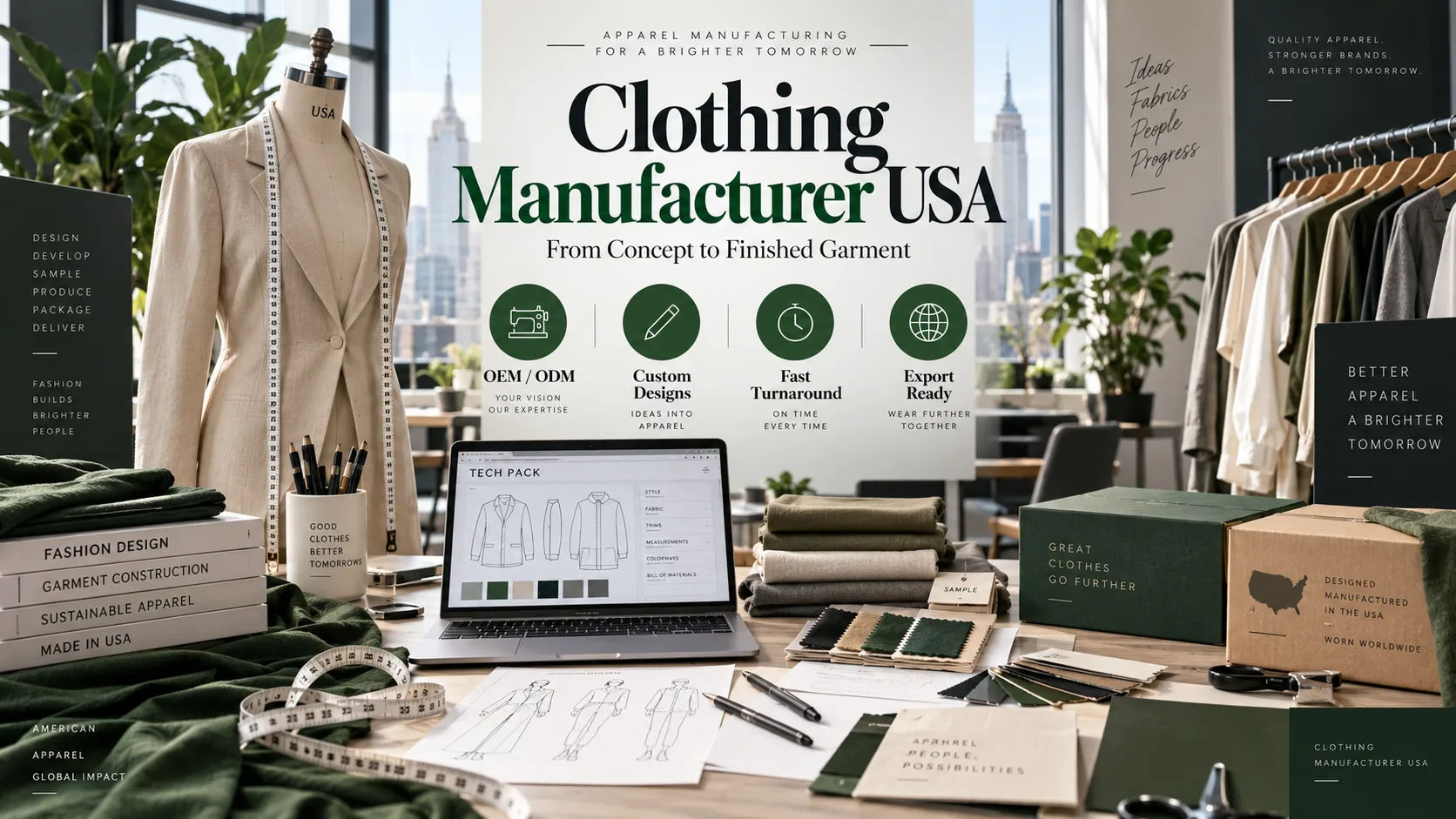
For a new clothing business, the production partner is not simply a factory that cuts and sews fabric. The right partner can become an extension of the startup team. They can help translate a product idea into technical specifications, coordinate suppliers, organize production schedules, and identify problems before they become expensive mistakes.
A bulk apparel manufacturer for startups can take responsibility for many of the practical tasks that founders cannot efficiently manage alone, from sourcing materials to quality control and shipping. Understanding what they actually handle makes it easier for a founder to choose the right manufacturing relationship.
Product Development and Design Support
One of the first responsibilities a production partner may handle is turning a concept into something that can actually be manufactured.
A founder may have a sketch, reference garment, mood board, or simple description of a hoodie, T-shirt, jacket, trouser, or dress. That information is useful, but it is rarely enough for consistent production. The manufacturer may help convert the idea into a technical package containing measurements, construction details, fabric requirements, stitching instructions, labels, trims, and finishing requirements.
A capable bulk apparel manufacturer for startups can also recommend practical construction choices when a design is too complicated for the intended price point.
This stage matters because small misunderstandings can become large production problems. A pocket placed slightly too low, an incorrect sleeve measurement, or a fabric that behaves differently after washing can affect thousands of finished garments.
An experienced bulk apparel manufacturer for startups will usually ask practical questions early. What fit is required? What fabric weight is appropriate? How should the garment stretch? Which seams need reinforcement? What type of closure, zipper, button, drawcord, or elastic should be used?
That practical feedback can save a startup from approving a design that looks good on paper but performs poorly in manufacturing.
Tech Packs and Specifications
A good technical specification gives everyone the same production reference. It can include garment measurements, tolerances, construction notes, artwork placement, color references, fabric composition, and packaging instructions.
The manufacturer may review the information and point out missing details. If the startup does not have a professional tech pack, some manufacturers also offer development assistance or can work from samples and detailed references.
The goal is not to take creative control away from the founder. It is to make sure the creative idea survives the manufacturing process accurately.
Fabric and Material Sourcing
Materials are one of the biggest factors affecting garment quality and cost. A production partner may source fabrics, linings, ribbing, thread, buttons, zippers, labels, packaging materials, and other components.
For startups, this service can be especially useful because purchasing materials independently requires supplier research, price negotiation, quality checks, minimum order management, and logistics.
For a young brand, a bulk apparel manufacturer for startups may be able to consolidate several sourcing tasks into one coordinated workflow.
A bulk apparel manufacturer for startups often has established supplier relationships. That does not automatically mean every material will be cheaper, but it can make sourcing more organized and predictable.
The manufacturer can also explain the practical differences between materials. For example, two cotton fabrics may have the same fiber composition but behave differently because of weight, weave, finishing, shrinkage, or dyeing.
Material Testing
Material testing can include checking shrinkage, colorfastness, stretch recovery, weight, construction, and wash performance. The exact tests depend on the product.
The right bulk apparel manufacturer for startups will explain which fabrics are readily available and which may require custom development.
This is important because fabric problems discovered after mass production can be extremely expensive. Testing a sample before ordering a large quantity is usually much safer than discovering the problem after the garments are finished.
A bulk apparel manufacturer for startups can also advise whether a special finish is worth its added cost based on the target retail price.
Sampling and Prototype Development
Sampling is where an idea starts becoming a physical product. A production partner may create the first prototype, make revisions, and prepare a final pre-production sample.
The first sample is rarely perfect. That is normal.
The fit may need adjustment. The neckline may sit incorrectly. The fabric may be too heavy. The print may need repositioning. A zipper may not work as expected. A professional production partner understands that development is an iterative process.
Good sampling practices are one reason a bulk apparel manufacturer for startups can be valuable before the first large purchase order.
A startup should use this stage carefully rather than rushing directly into bulk production. Measurements, construction, trims, branding, and overall appearance should be reviewed before approval.
Sample Revisions
Sample revisions should be documented clearly. Instead of saying that something "looks a little bigger," the startup should provide measurable instructions whenever possible.
For example, a sleeve could be reduced by a specific amount, a body length could be increased, or a logo could be moved to a defined position. Clear communication reduces confusion and makes revisions easier to track.
A reliable bulk apparel manufacturer for startups will generally keep records of approved specifications so the final production team has a reference point.
A bulk apparel manufacturer for startups should be willing to show how sample comments are recorded and transferred to production.
Pattern Making and Grading
Pattern development is another major responsibility that may be handled by the production partner.
Patterns define the shape and construction of garment pieces. Once the base size is approved, the pattern may need to be graded into multiple sizes.
Grading is not simply making every measurement proportionally larger or smaller. Different parts of the body change at different rates between sizes. A professional pattern maker uses established grading rules to maintain the intended fit.
Poor grading can make a garment look correct in one size but uncomfortable or distorted in others. For a startup building customer trust, consistent sizing is critical.
When sizing is important, a bulk apparel manufacturer for startups should explain its pattern grading process instead of simply promising consistent sizes.
Costing and Production Planning
Before production begins, the manufacturer usually calculates the expected cost of making the garments.
Costing can include fabric, trims, labor, printing or embroidery, washing, packaging, and other production expenses. Some projects also involve sampling, pattern development, testing, and special finishing charges.
The startup should ask for a clear cost breakdown rather than looking only at the final unit price.
A practical bulk apparel manufacturer for startups will help separate unavoidable production costs from optional upgrades.
A bulk apparel manufacturer for startups may also help determine production quantities and timelines. This is valuable because startups often have limited cash flow and cannot afford to hold excessive inventory.
Managing Minimum Order Quantities
Minimum order quantity, commonly called MOQ, is an important manufacturing issue. Some factories require large quantities because setting up production takes time and resources.
A startup may need smaller quantities while testing the market. A flexible manufacturer may offer lower MOQs, mixed sizes, or limited production runs, although these options can affect the unit price.
An experienced bulk apparel manufacturer for startups may suggest a smaller launch quantity when demand is still uncertain.
The right decision is not always the lowest MOQ. A slightly higher unit cost may be worthwhile if it allows the startup to avoid thousands of dollars in unwanted inventory.
Production Management
Once the sample is approved and the order is confirmed, the production partner coordinates the manufacturing process.
This can include fabric ordering, cutting, sewing, printing, embroidery, washing, pressing, finishing, inspection, packing, and shipment preparation.
Different factories organize these stages differently. Some perform nearly everything in-house, while others use specialized subcontractors for printing, embroidery, dyeing, or washing.
A good production partner should be able to explain who handles each stage. This matters because responsibility becomes unclear when several suppliers are involved.
A bulk apparel manufacturer for startups can coordinate production stages so the founder does not have to chase every subcontractor individually.
Production Scheduling
Timing is another major part of production management.
The manufacturer needs to coordinate material arrival, production capacity, worker availability, machinery, finishing, inspection, and shipping. A delay at one stage can affect everything that follows.
Startups should avoid assuming that a quoted production time begins on the day they send the first design. Lead times often depend on sample approval, material availability, deposit payment, and final confirmation.
A realistic production schedule is more useful than an optimistic promise that later changes.
Quality Control
Quality control is one of the most important responsibilities a production partner can handle.
Inspection may occur at different points. Materials can be checked before cutting. Production pieces can be inspected during sewing. Finished garments can be checked before packing.
Inspectors may look for stitching problems, measurement differences, fabric defects, stains, incorrect labels, print placement issues, loose threads, broken trims, and other defects.
The strongest bulk apparel manufacturer for startups will treat quality standards as part of the production plan rather than an afterthought.
Defining Acceptable Quality
Quality should be defined before production begins. The approved sample can serve as the main reference, but written standards are also useful.
For example, the startup can define acceptable measurement tolerances, print positioning, color expectations, seam requirements, and packaging standards.
This prevents disagreements after production. If quality expectations were never clearly established, both sides may have different ideas about what "good quality" means.
Branding, Printing, and Embroidery
Many startup brands need more than basic garment construction. They may require screen printing, digital printing, embroidery, woven labels, patches, neck labels, hangtags, or custom packaging.
A production partner may coordinate these services internally or through specialist suppliers.
A bulk apparel manufacturer for startups may also help the brand compare different decoration methods according to cost, durability, and appearance.
Branding details should be approved carefully because small placement errors can make a finished product look unprofessional. Artwork files should also be supplied in the correct format and resolution.
For embroidery, stitch density and thread selection can affect how a logo looks on different fabrics. For printing, fabric type and color can affect the final result.
Packaging and Labeling
Packaging is another area that a production partner may manage.
This can include folding garments, attaching hangtags, adding size stickers, inserting garments into polybags, preparing cartons, and applying shipping marks.
Labels may include brand information, size, fiber composition, care instructions, country of origin, or other legally required information depending on the market.
For a startup selling internationally, labeling requirements should be confirmed before production rather than after the garments have been made.
Inventory and Order Fulfillment Support
Some production partners provide services beyond manufacturing. They may store finished goods, prepare cartons by SKU, organize inventory, or support direct fulfillment.
This can be useful when a startup does not have warehouse space.
However, manufacturing and fulfillment are separate services, so the startup should confirm exactly what is included. Storage fees, pick-and-pack charges, shipping costs, and inventory handling may be billed separately.
A production partner that understands startup operations can also help organize products by style, color, and size, making future orders easier to manage.
Shipping and Export Coordination
Once the garments are complete, someone has to move them from the factory to the destination.
A production partner may prepare export cartons, commercial invoices, packing lists, and other shipping documents. They may also work with freight forwarders or courier services.
A bulk apparel manufacturer for startups can make shipping preparation easier by organizing cartons and production documents.
The startup should understand whether the quoted manufacturing price includes shipping. In many cases, it does not.
Shipping method can also affect cost and delivery time. Air freight may be faster but more expensive, while sea freight can be economical for larger shipments but usually takes longer.
Communication and Problem Solving
One of the least visible but most valuable services a production partner provides is communication.
Manufacturing rarely goes perfectly. A fabric may become unavailable. A supplier may change a trim. A sample may fail to meet the requested fit. A machine issue may slow production.
The important question is how the manufacturer responds.
A good partner communicates problems early and proposes realistic solutions. A weak partner may hide problems until the delivery date is already at risk.
Startups should therefore evaluate communication quality before placing a large order. Fast replies are useful, but accurate and honest information is more important.
What the Startup Still Needs to Handle
Even when a manufacturer provides extensive support, the startup remains responsible for important decisions.
The brand owner normally controls the product vision, target customer, pricing strategy, marketing, sales channels, budget, and final approvals.
The manufacturer cannot decide whether a particular product fits the brand's market. It can provide technical and production advice, but the startup has to make the commercial decision.
The startup should also maintain copies of approved samples, specifications, invoices, production records, and important communications.
How to Choose the Right Production Partner
Choosing a manufacturing partner should not be based only on the cheapest quote.
Look at product experience, sample quality, communication, MOQ flexibility, quality control, production capacity, material sourcing, lead times, and previous work.
Ask what happens if a batch has defects. Ask who pays for corrections. Ask whether materials are sourced directly or through another supplier. Ask how approvals are documented.
A startup should also be cautious about vague promises. If a supplier claims it can manufacture everything at any quantity and any price, ask for specific details.
A bulk apparel manufacturer for startups with transparent processes can reduce avoidable surprises during the first production cycle.
A strong bulk apparel manufacturer for startups will usually explain limitations as well as capabilities. That transparency is a good sign because every production setup has constraints.
Building a Long-Term Manufacturing Relationship
Once a startup finds a reliable partner, the relationship can become more valuable over time.
The manufacturer learns the brand's preferred fabrics, measurements, trims, packaging style, quality expectations, and communication process. Future orders may become easier because fewer details need to be explained from scratch.
However, the relationship should still be professional. Agreements, specifications, approvals, payment terms, and delivery expectations should be documented.
Trust is helpful, but documentation protects both sides.
The best bulk apparel manufacturer for startups becomes a practical production resource as the brand grows.
Conclusion
A startup clothing production partner can handle far more than cutting fabric and sewing garments. Depending on the supplier, the relationship may cover product development, technical specifications, material sourcing, sampling, pattern making, grading, costing, MOQ planning, production scheduling, quality control, branding, packaging, inventory support, and shipping coordination.
For a new brand, this support can remove a large amount of operational pressure. Instead of trying to manage dozens of separate suppliers, the founder can work with one experienced team that understands how the pieces fit together.
A bulk apparel manufacturer for startups is especially useful when the brand needs practical guidance while controlling costs and avoiding unnecessary inventory. The best partner will not simply say yes to every request. They will explain what is realistic, identify production risks, and help the startup make better decisions.
A dependable bulk apparel manufacturer for startups should make expectations clear before money is committed.
The smartest approach is to start with clear product specifications, approve samples carefully, define quality standards, confirm costs and timelines, and keep communication documented. Choosing a bulk apparel manufacturer for startups with transparent processes can reduce avoidable surprises during the first production cycle.
Once the first production run is successful, the manufacturer can become a dependable part of the brand's supply chain. The relationship may become more efficient as both sides understand the product standards, preferred materials, packaging requirements, and production expectations.
In clothing production, a good idea is only the beginning. Consistent execution is what turns that idea into a product customers can trust. Choosing a production partner that can manage the technical and operational details gives a startup a much stronger foundation for growing from its first small collection into a stable clothing business.